
Continue Watching?
On Autoplay, Defaults, and Learning to Reach for the Remote

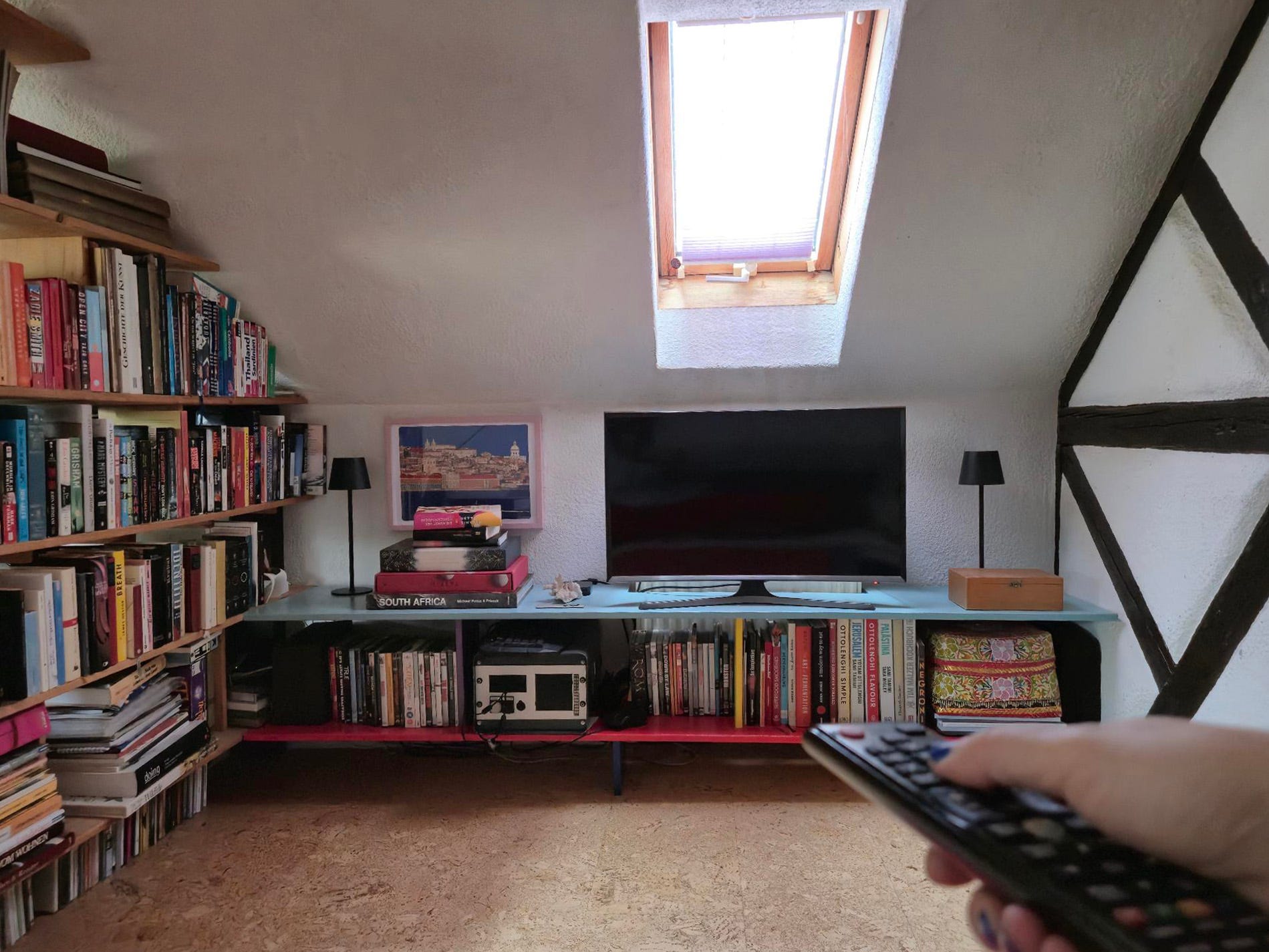
Come on, I’m not the only one that gets this question, am I?
Netflix asks me that sometimes, more often than I want to admit. And I know that question only pops up when I haven’t reached for the remote for a long while. I think about that question a lot. I press play, hear the da-dum, and then give up control completely.
I am not a lazy person, far from it. Not explaining, just saying - because like most people probably, I need coping mechanisms like binge-watching the new season of Love is Blind, Bridgerton, and Heated Rivalry to distract myself from having to be an adult and doing adult things.
And so, when that question shows up on the big screen - which I sometimes only notice when I lift my gaze from the little screen I am staring at in my hand, because I wonder why there’s no sound coming from the big screen - I can’t help but wonder if it’s meant to be a philosophical question.
Continue watching?
Continue... what, exactly? The show? Or this? This pattern, this night, this life on autopilot?
Because I know I am actually too tired to follow the plot. (Did you know they dumb down the plot because they know I’m not paying attention? There’s a name for it - passive viewing, second screen syndrome - the assumption that I’m multitasking, so stories need to be followable even with divided attention.) I should have brushed my teeth and gone to bed two episodes ago. And still I sometimes feel paralyzed and can’t be bothered to reach for the remote.
And so, Netflix makes that decision for me and I click “don’t ask me again.”
Don’t ask me again.
Don’t make me choose. Don’t interrupt the flow. Don’t remind me that I’m here, doing this, when I could be doing something else. Just keep it going. Put me on autoplay too.
Sometimes though, I do notice. Like when I realize my thoughts have wandered during meditation and I’m suddenly fully present again. Like waking up or coming back from somewhere. And in that moment, I have a window to choose. If I miss it, I fall back into the daydream. If I catch myself - there’s that phrase again, catching myself, as if I’m something slippery trying to escape - I can return to the moment and actively decide what I want.
But most nights? I don’t catch myself. Or I do, and I choose not to choose.
That response - “don’t ask me again” - it’s not just about Netflix. It’s about opting out of the moment where I might actually choose something different. It’s easier to be a bystander in my own life. To pretend I’m not the one pressing play. To pretend this is just... happening to me.
THE PATTERN
Weeknights most often look like this: After many hours of focused work, in the dark hours when my mind isn’t capable of doing sensible things like reading or writing or working out, I end up here. Watching the big screen, chatting to friends on the little screen, or wasting time doom scrolling from one to the other.
And here’s the thing - it’s not that I should be working more. I know I do enough. Much more than that. And I love it. I definitely deserve rest and recovery, entertainment and the joy of just being free of obligations for a while. The problem isn’t that I’m wasting time or opportunity.
The problem is the default autoplay that keeps me locked in, trapped, or sometimes even taken over - like a parasite taking away the need to make a choice.
I do have a very active life. I spend a lot of time outside in nature, with my dogs, hiking, meeting friends. I don’t feel out of touch with the world - that was a big shift after two decades of big city life. But I’m finding the balance. Because sometimes, especially in the dark months, I tend to be more of a homebody, hibernating and hiding from the cold, dark, wet outside world. So I very much welcome the days getting longer again, and I know the brighter days will lure me out.
But on these winter weeknights? I am so used to staying up late. I do love watching movies and series, but sometimes I can’t stop. Same with Instagram - at least until a few days ago when I deleted it from my home screen. That small change already made a huge difference. The extra hurdle of having two or more extra clicks to get to the feed is often enough to give me the strength to say no. To go to bed instead. To read a chapter in my book. To play video games I actually enjoy, or finally finish that sewing project, or do the dreadful task of monthly bookkeeping that I’ve been avoiding. Really, I should turn off screen time around 21:30 and read until I’m actually tired enough to sleep.
So much of my unhealthy habits happen subconsciously. The hours just fly.
The Netflix autoplay that keeps running. The phone I pick up without thinking. The fact that I’m “so used to” a pattern I fell into years ago - these aren’t really choices. They’re defaults. Structures that bypass my conscious decision-making entirely. I’m not choosing. I’m just... continuing.
I’m on autoplay too.
And isn’t it mind-blowing how in our culture, the only time I move is to move from one screen to the next? On these winter weeknights, I am surrounded by more black mirrors than blue skies or green trees. Laptop screen to little screen to TV screen and back again. The autoplay life has a shape: sedentary, illuminated, alone with a feed.
WHAT I THOUGHT THIS WAS ABOUT
For a long time, I framed this as a philosophical question. I’m torn between two ways of approaching life, I told myself. On one side, there’s this pull toward trusting that everything happens for a reason, letting go, going with the flow of things. On the other, there’s the voice that says I need a healthy routine, a consistent sleep schedule, discipline.
Should I set an alarm, get up early, overcome my procrastination, fight against my biological rhythm? I’m the definition of a night owl, but I so wish I could be an early bird. Or should I just trust that my body will tell me what’s right? It felt like a meaningful tension - discipline versus flow, structure versus authenticity.
But that’s not actually what this is about. That philosophical framework was just another way of not reaching for the remote. Another way of staying exactly where I am while pretending I’m deeply considering my options.
Another way of pretending not to know what I know.
WHAT THIS IS ACTUALLY ABOUT
The truth is messier: I know what I want. I want to write, journal, work out, finish all my unfinished DIY-projects. I imagine waking up early and using those quiet morning hours for the things that matter to me, before I start paid work. I know this would serve me better. But I don’t do it by default.
And here’s where it gets uncomfortable: people always tell me how much more freedom I supposedly have. In reality, I don’t - because everything is up to me.
When I don’t hustle, I don’t gain anything.
That struggle is real. That’s the reality of being an entrepreneur, of running my own business. There’s no salary that appears regardless of what I do. No paid vacation days. No sick leave. If I’m not actively building, creating, showing up - nothing happens. The business doesn’t run itself. And that’s overwhelming.
Here’s what’s strange though: I have no trouble making decisions quickly and decisively. I have no trouble making hard and risky choices and living with the consequences. I can commit to starting a business, filing trademark applications, making strategic pivots. But I do sometimes struggle with the details. With the small, daily choices that don’t feel consequential but add up to everything.
I am brilliant at procrastinating if I don’t have or set a deadline. Unless I’m deeply passionate about something - like writing - then I obsess and put in every free minute. nonplusultra is the first project in a while to capture me completely. But even there, I manage my own time. So I can sleep in, or watch another episode, or hang out whenever.
When I had a job in the past, I had constraints, yes, but also clarity. The path was laid out. I just walked it. When everything is up to me? Every moment is a choice. Every choice becomes a referendum on my values, my discipline, my worth.
Freedom without structure isn’t liberation. It’s paralysis. And the guilt isn’t about not being productive enough - it’s about losing myself to defaults. About having time that should be genuine rest and recovery hijacked by autoplay. About clicking “don’t ask me again” and becoming a bystander in my own life.
THE REAL PROBLEM
I pretend not to know what I know, because I don’t know what to do next. Or I don’t want to.
Not all tasks are fun and exhilarating when you’re a one-woman-show. It’s a good show, but there’s slow-burn sometimes. The arc of my story has its ups and downs, and sometimes the buffering is stuck at 96% and just won’t “play next.”
And when I’m stuck there, at 96%, that’s when everything else floods in.
I know about climate change and political instability and economic precarity. I know there are infinite things I could be optimizing about my health, my productivity, my relationships. I know there are infinite possible paths my life could take.
And honestly? I actually struggle to believe that everyone is as disciplined as they tell me. Come on, really?
In a world where I have infinite information and infinite choice, every decision becomes a moral referendum. Going to bed early isn’t just going to bed early - it’s choosing productivity culture over self-acceptance. Sleeping in isn’t just sleeping in - it’s choosing laziness over ambition. Watching Netflix isn’t just entertainment - it’s avoiding my purpose.
No wonder I disappear into the scroll. Not because I don’t know better. Because knowing better has become unbearable.
So I pretend. I click “don’t ask me again.” I let the autoplay run. I scroll without seeing. I become passive in my own life, as if things are just happening to me, as if I’m not the one pressing play over and over and over.
RECONFIGURING THE DEFAULTS
But it’s not about maximizing profit or productivity. I very much believe that the biggest source of creativity - the kind that births ideas that are genuinely new and worthwhile - originates in boredom. Finding boredom is immensely valuable to the creative mind. And I am born to be creative.
So depression rises if all I do is consume. But my mind is not built to process the amount of information that I am confronted with. I need to filter better, turn off autoplay, and remove all algorithms from my home screen that feed the provider more than they feed me, my body, my mind, my soul.
I can’t imagine default settings ever being in my best interest. They’re designed for someone else’s goals - keeping me watching, keeping me scrolling, keeping me engaged with their platform. So I need to look closely at those settings and figure out how to configure them, how to fine-tune them. It’s almost a way of finding myself - discovering what I actually want beneath all these defaults I never chose.
Deleting Instagram from my home screen wasn’t an act of discipline in the traditional sense. It wasn’t about gritting my teeth and resisting temptation. It was choosing to close off a possibility. Choosing to know less. Accepting that I can’t optimize everything. It was reconfiguring a default.
And that acceptance feels like admitting something uncomfortable: I need structure. I need the very constraints I thought freedom would liberate me from. Agency without structure isn’t freedom - it’s just anxiety.
Something I did a long time ago already is to ban my phone from my bedroom. Because I imagined all the people that I am available to via my phone, standing in my bedroom, delivering those messages in person. And I realized it was getting pretty crowded in my bedroom. I rest easier now that it’s a sacred space again.
These apps - Instagram, Netflix, all of them - are designed to keep me locked in, running down their rabbit holes. That’s the business model. The autoplay, the infinite scroll, the algorithm that learns exactly what will keep me watching - none of this is accidental. I’m swimming against a riptide designed to pull me under.
I’m not bashing these platforms - I actually love on-demand streaming and social media for many reasons. I’m just saying I need to adjust the default settings so that my personal interests are put ahead of theirs. I’m not faulting them for trying to do the same.
But I have more agency than I think. And what I don’t change, I choose. I let so much happen and think I’m not a part of it. But clicking “don’t ask me again” on the Netflix prompt? That’s a choice too. A choice to automate away even the moment of potential decision. A choice to stay on autoplay.
NO MORE AUTOPLAY
I think my second experiment is to switch off autoplay. No more autoplaying this game of life.
Not because I’ve figured it all out. Not because I have some perfect morning routine now or because I’ve conquered my night owl tendencies or resolved the tension between discipline and flow.
But because I’m starting to understand that the question isn’t “discipline or flow?” The question is: who’s designing my defaults? Am I? Or am I just continuing because I haven’t bothered to reach for the remote?
Continue watching?
The question isn’t really about Netflix. It’s about whether I’m going to keep being a bystander in my own life. Whether I’m going to keep pretending not to know what I know. Whether I’m going to keep choosing not to choose.
The key to building a better life for myself is in fine-tuning the default settings of my tangible and digital world. Looking closely at what’s been configured for me and asking: is this serving me? Or am I serving it?
When I’m deeply passionate about something - like nonplusultra - the discipline appears effortlessly. I obsess, I put in every free minute. The structure builds itself around what matters. So maybe the real work isn’t forcing myself into someone else’s idea of a productive life. Maybe it’s clearing away enough noise - enough autoplay, enough infinite scroll, enough paralysis disguised as choice - to find the boredom where genuine creativity lives.
If nothing changes, nothing changes. So I’m writing this, to hold myself accountable. Saying it out loud makes it easier to choose to opt out of autopilot. To look up at what’s real in this moment.
And honestly? This one makes me feel extra vulnerable. Because it’s hard to admit not being 100% on fire all the time. I want my clients to think I’m a productivity machine that always excels, even in my free time. But if I think about it... the real hustle is proven in: 1) acknowledging the weakness, 2) aligning my wants and my actions, and 3) walking the talk.
Because here’s what I’m learning: discipline and structure give me more freedom than continuing to watch ever could. It’s about making the harder choice now, in honor of the person I want to be tomorrow.
I don’t have all the answers. I’m still figuring out how to act when drowning in awareness of everything I could be doing differently. Still learning what to do with agency when I actually have it. Still trying to stop feeding the guilt and start building the structures I need.
Maybe my Netflix is your YouTube, or Reddit, or whatever keeps you scrolling past midnight. It doesn’t matter. The distraction industry has something designed to capture all of us. Same same, but different.
I know this: Netflix will keep asking “Continue watching?”
And I need to start actually answering the question.
Not by clicking “don’t ask me again.”
But by catching myself in that 5-second window - that brief moment of noticing - and reaching for the remote.
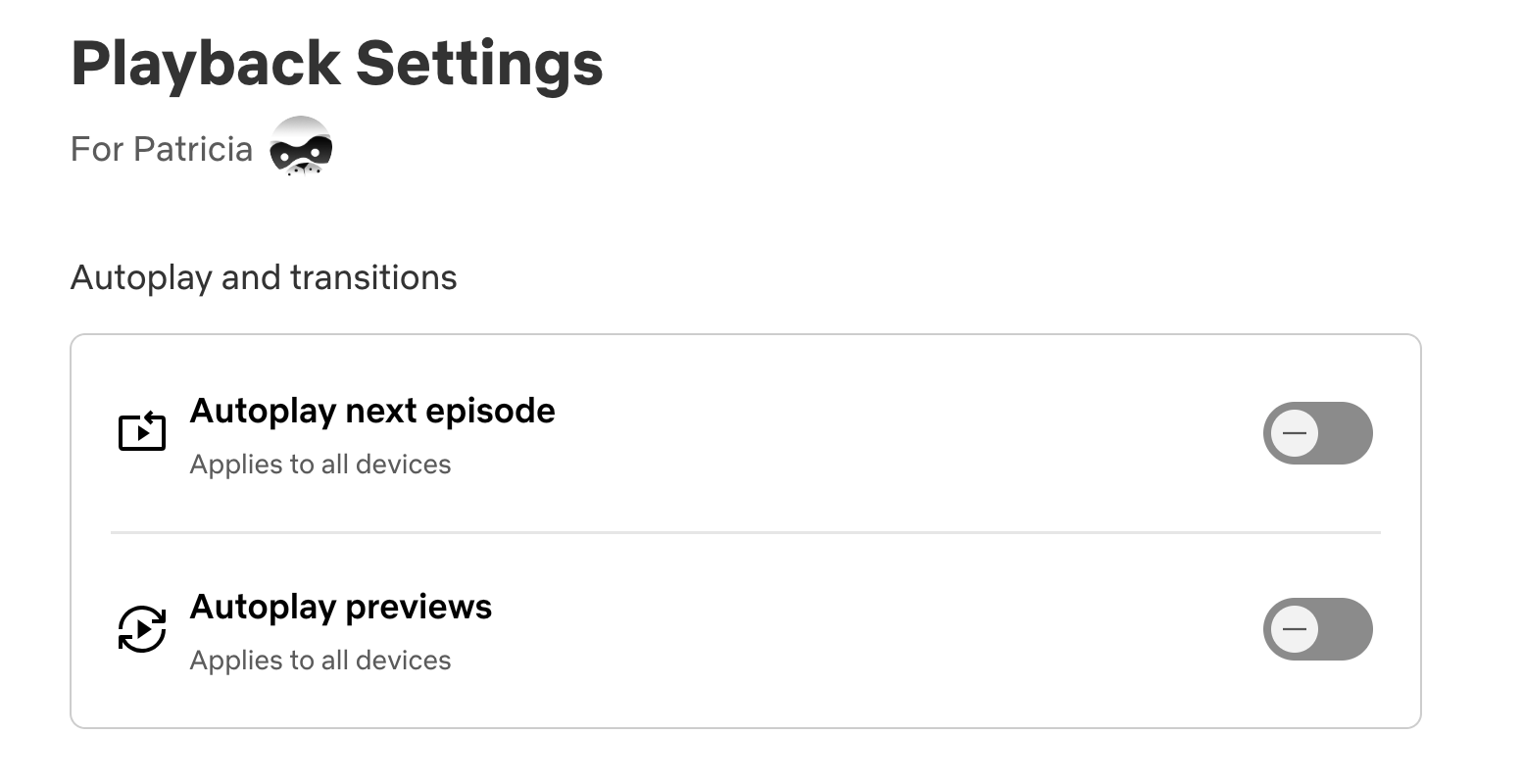
P.S. Autoplay: off.
Thanks for reading. If this resonated, let me know in the comments - it would mean a lot to hear I’m not alone in this. And subscribe if you want more.